T-shirts invisible to AI cameras: how opposing designs fool CCTV
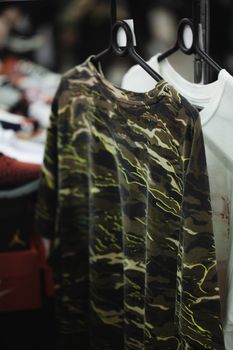
In a world where AI-powered video surveillance blankets public spaces, Bill Swearingen offers an elegant counter-argument: t-shirts that render their wearers invisible to algorithms. This unconventional concept, at the crossroads of visual hacking and design, uses carefully calculated patterns to deceive artificial vision. We decode the prints that obscure the trail and the reasons for their effectiveness.
The genesis of an electronic protest: from art to...’adversarial fashion
Bill Swearingen, a digital artist and privacy activist, has transformed a theoretical flaw into a collection of subversive clothing. His project, born from the study of adversarial examples —these minute disruptions that throw neural networks off balance — initially relied on research showing that a simple sticker could render an object undetectable. Swearingen extended this logic to textiles, marketing psychedelic-looking t-shirts capable of fooling people detectors like YOLOv2. Behind the aesthetic approach lies a technopolitical manifesto: reclaiming anonymity in a public space saturated with smart cameras, by exploiting not discretion, but rather calculated visual excess.
Far from being a mere gadget, these garments raise a fundamental question: since machines learn to recognize us, can we relearn how to evade them by wearing a counter-suit? The answer depends entirely on the chosen patterns and their ability to disrupt the hierarchies of features used by AI. This is what we will break down.
The secret to effective patterns: how to hack a neural network with a printed pattern
Artificial vision, particularly that of single-shot object detectors like YOLO, operates in successive layers. The first layers capture basic contours and textures; deeper layers assemble these building blocks into meaningful shapes—an eye, a shoulder, a human silhouette. Deceiving AI, therefore, amounts to... saturate these stages with false signals or to prevent the formation of a coherent, encompassing framework. Not all printed materials are created equal; here are the main categories that work and their mechanisms.
- The optimized adversary patch. This is the most direct weapon. Using algorithms that maximize the probability of the "person" category being rejected, a pixelated, often multicolored, pattern is generated that acts as a dominant decoy in the detector's receptive field. In practice, the image of the t-shirt triggers such strong activation in the wrong category (or in the background) that the network completely ignores the human torso. These patches are designed to be robust to real-world transformations Fabric folds, lighting variations and angle changes are simulated during optimization so that the effect lasts under natural conditions.
- The "dazzle" camouflage was inspired by the Dazzle CV. Inherited from warships and adapted to the face by the artist Adam Harvey, this style relies on strong black and white contrasts and angular geometric shapes. Applied to a t-shirt, it fragments the overall silhouette, preventing the algorithm from finding the smooth contours and distances between shoulders, neck, and head that serve as detection cues. The network struggles to merge these fragments into a single object, drastically reducing prediction confidence.
- Anthropomorphic decoys and false activations. Some designs deliberately incorporate prints of fake eyes, mouths, or even partial faces. The aim is to trigger a avalanche of spurious detections The system then starts offering hundreds of inconsistent encompassing boxes, creating a cacophony that obscures the true face and overwhelms the algorithm with false positives. This technique exploits the tendency of networks to "hallucinate" human presence as soon as an arrangement of tasks resembles a learned pattern.
The power of these patterns stems from a fundamental characteristic of convolutional networks: their dependence on local correlations. An adverse patch acts as such a strong visual attractor that it captures the entire attention of the classification mechanism, reducing the rest of the image to insignificant noise. Furthermore, because these perturbations are calculated in tall dimension And subtly oriented within the feature space, they remain practically invisible to the human eye but radically distort the machine's internal representation. Thus, wearing a correctly printed t-shirt, an individual is no longer perceived as a statistical threat ("person"); they become an incomprehensible textured area, an anomaly that the AI prefers to ignore.
Ultimately, Bill Swearingen's t-shirts transcend mere provocation, embodying an elegant resistance to the machine gaze. Adversarial patches, disruptive grids, and anthropomorphic decoys exploit the flaws in artificial vision. While the race for algorithmic camouflage is only just beginning, this concept serves as a reminder that AI is not infallible and that human creativity can reclaim control of its image.