EmDash 1.0: Cloudflare launches a free and open-source CMS to challenge WordPress
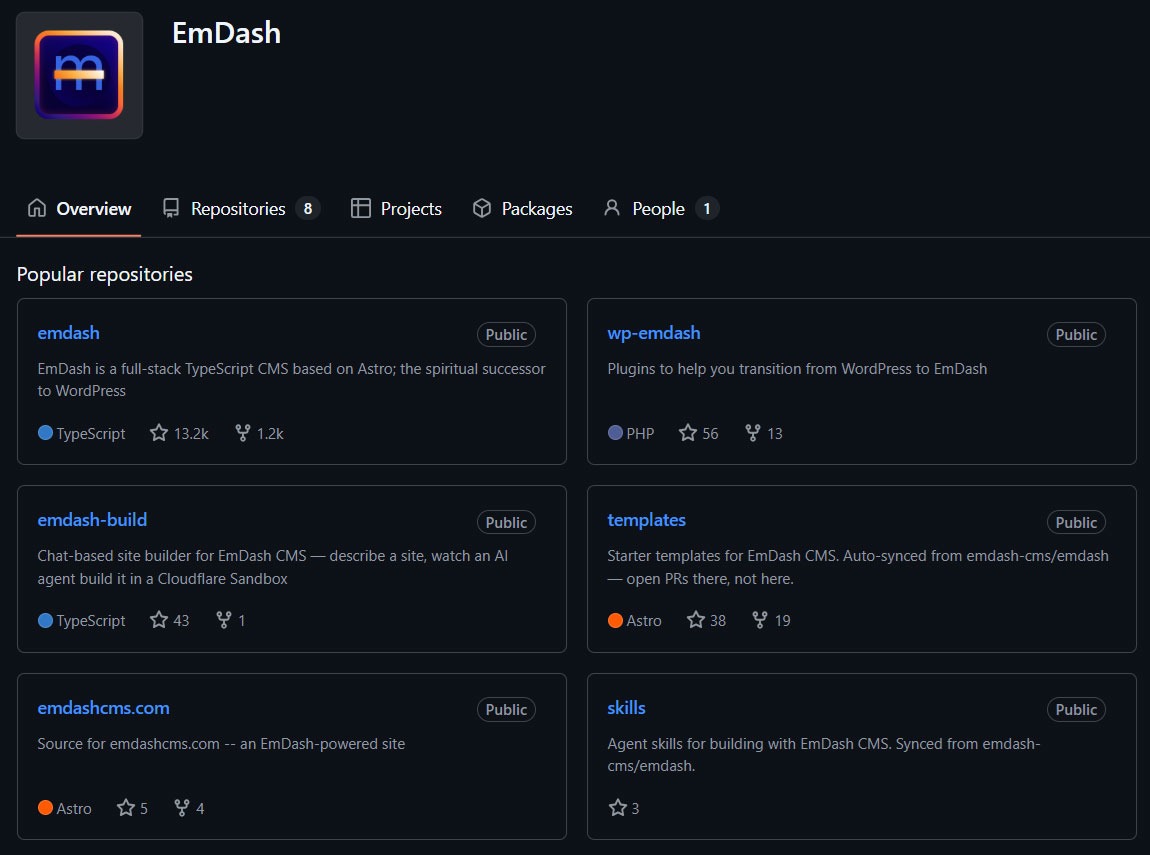
Cloudflare recently launched EmDash EmDash 1.0 is a free, open-source CMS that leverages the edge infrastructure of the American giant to offer a modern content management experience. With its optimized performance and built-in security, it aims to compete with WordPress, the undisputed leader in CMS platforms. But beyond the technological promise, can EmDash truly disrupt an ecosystem established for over twenty years? An analysis of its strengths and weaknesses.
A native edge architecture for unparalleled performance
EmDash 1.0 breaks with the traditional architecture of CMSs. Unlike WordPress, which relies on a central server running PHP and using a MySQL database, EmDash is designed entirely for the web environment. serverless from Cloudflare. Each request is processed by a Cloudflare Worker, Lightweight code executed as close as possible to the user, on one of the countless points of presence in the edge network. The content is stored in Cloudflare D1, a globally distributed and replicated SQLite database, while the media files reside in Cloudflare R2, Object storage with no egress costs. This design eliminates the concept of a server to maintain: no system updates, no load spikes to worry about, scaling is automatic and instantaneous.
The generous pricing model allows most small projects to get started at no cost. More fundamentally, EmDash is a CMS headless And API-first. It exposes all of its content via REST or GraphQL APIs, making it compatible with all modern frontends: static sites generated by Astro or Next.js, and applications like React, Vue, or Svelte. Where WordPress often requires complex caching layers (Varnish, Redis) and optimization plugins to achieve decent response times, EmDash offers native speed and enhanced security from the very first byte. The risks associated with plugin vulnerabilities—a historical scourge of WordPress—are structurally reduced because the application logic runs in an isolated and always up-to-date sandbox.
The ecosystem, the weak link in the face of the WordPress galaxy
WordPress's power lies primarily in its colossal ecosystem: more than 60,000 free extensions, Thousands of themes, visual builders like Elementor, and a global community of developers, agencies, and trainers. This environment allows a non-technical user to create an online store with WooCommerce, refine their SEO with Yoast SEO, or translate their website in just a few clicks. EmDash, barely out of version 1.0, has neither a plugin marketplace nor a library of mature themes. Its native features cover the essentials—creating custom content types, managing media, and internationalization—but any advanced needs currently require custom development through Web Workers.
For technical profiles, this blank canvas is a freedom: they can assemble exactly the building blocks they need by leveraging Cloudflare services (image optimization with Cloudflare Images, streaming with Stream, or even artificial intelligence with Workers AIHowever, for an end user accustomed to the WordPress administration interface or its Gutenberg editor, EmDash's learning curve may seem steep. Migrating an existing WordPress site is also complex, as there is no automated import tool. EmDash doesn't aim to be an enhanced clone, but rather a modern alternative for projects where performance and security take precedence over an abundance of out-of-the-box features. It could appeal to creators of high-traffic showcase websites, technical blogs, or web applications coupled with custom frontends, thus taking market share from WordPress in these segments.
Open source and free access: a disruptive business model
By releasing EmDash under an open-source license and offering a highly competitive free tier, Cloudflare is adopting a strategy to win over developers. Where WordPress requires subscribing to hosting (often shared, with its associated slowdowns) and purchasing premium extensions to unlock professional features, EmDash makes edge performance accessible without barriers to entry. Cloudflare is banking on a halo effect: users attracted by the CMS will naturally tend to adopt other paid services within the Cloudflare ecosystem as their projects grow (increased number of workers, additional storage, advanced security measures).
This model is reminiscent of WordPress's early days, which established itself through its free access and ease of installation, before generating a thriving economy around hosting, themes, and consulting. EmDash could follow a similar trajectory, but starting from a radically lighter and more modern technical foundation. In the long run, competitive pressure could push WordPress to improve its raw performance and simplify its headless deployment method (via the REST API). For now, EmDash represents a credible alternative for new projects where speed and security are paramount, without claiming to dethrone a leader that powers nearly half the web. The history of CMSs is punctuated by challengers who redefine expectations: EmDash has the potential to inject new momentum.
EmDash 1.0 embodies a decidedly modern vision of the CMS, combining edge performance, built-in security, and a free model, all powered by the Cloudflare ecosystem. While it won't dethrone WordPress in the short term, it establishes itself as a serious alternative for projects prioritizing speed and simplicity. Its open-source nature and potential for future development could allow it to gain market share, prompting WordPress to accelerate its own transformation. Developers and website creators should seize this opportunity to experiment with a more agile approach to the web.