Cheaper than OpenAI and Anthropic: the new AI models that are revolutionizing the market
Cheaper AI models are shaking up OpenAI and Anthropic
The dominance of OpenAI and Anthropic in the artificial intelligence market is now being challenged by a new generation of high-performing, significantly less expensive open-weight models. Driven by players like Meta, Mistral AI, and Alibaba, these models are redefining the rules of the game. Between technological democratization, digital sovereignty, and cost optimization, companies must now rethink their strategies. Here's how these economic alternatives are transforming the AI ecosystem.
The irresistible rise of open weight models
The landscape of artificial intelligence has undergone a profound transformation with the publication of so-called models open weight, whose parameters are freely accessible. Unlike the closed APIs of OpenAI (GPT-4o, o1) or Anthropic (Claude 3.5, Claude 4), these models can be downloaded, modified, and run on one's own servers. This approach radically changes the game in terms of inference costs and data control.
Among the best performing open weight models currently available, several stand out as essential:
- Llama 3.3 70B by Meta : an excellent compromise between size and performance, capable of competing with GPT-4o on many reasoning and writing tasks, while being executable on a simple high-end GPU.
- Qwen 2.5 72B from Alibaba : very solid in mathematics, coding and multilingual understanding, it sometimes surpasses Claude 3.5 Sonnet on specialized benchmarks.
- Mistral Large 2 (123B) : the French champion, designed for European companies concerned about sovereignty and GDPR compliance.
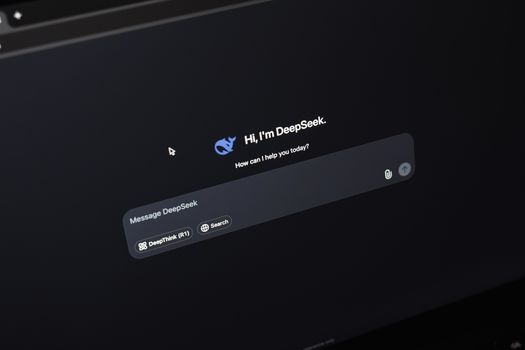
- DeepSeek V3 (671B, MoE architecture) despite its massive size, its architecture Mixture of Experts It only activates a fraction of the parameters with each request, making it surprisingly affordable to use.
- Microsoft Phi-4 (14B) : a surprisingly powerful little model, ideal for embedded or low-latency use cases.
These models are not merely "good enough": in several independent assessments, some meet or exceed the performance of their proprietary competitors, with operating costs as low as 10 to 20 times lower. For a company that processes millions of tokens per day, the savings quickly amount to tens of thousands of euros per month. This price pressure is forcing OpenAI and Anthropic to lower their prices and launch "mini" or "flash" versions to remain competitive.
Why API gateways like OpenRouter are becoming indispensable
Faced with this increasing fragmentation of supply—between closed models, open weights, multiple cloud providers, and constant price fluctuations—companies are confronted with a real operational puzzle. It is precisely here that... unified API gateways as OpenRouter take on their full value.
OpenRouter acts as a universal abstraction layer over 300 different models, whether hosted by OpenAI, Anthropic, Google, Meta, Mistral, DeepSeek, or other independent providers. In practical terms, this means that developers only need to write a single API integration and can then switch between models without modifying their code. This flexibility offers several major strategic advantages.
First, it allows a dynamic cost optimization Rather than locking itself into a costly proprietary ecosystem, an application can be configured to automatically route simple requests to an inexpensive open-weight model (such as Llama 3.3 or Phi-4), and reserve premium models (Claude 4, GPT-4o) for complex tasks that truly warrant them. This hybrid approach reduces the overall cost while maintaining high response quality.
Next, gateways offer a increased resilience. If a provider experiences an outage, performance degradation, or a sudden price increase, the company can migrate to an equivalent alternative within minutes, without any service interruption. This rapid failover capability has become a business continuity criterion for production applications.
Finally, OpenRouter and its competitors (such as Together AI, Fireworks AI, and Groq) are democratizing access to open-weight models: instead of having to manage the GPU infrastructure, deployment, horizontal scalability, and maintenance yourself, you access these models via a standardized API, billed on a pay-as-you-go basis. This allows you to benefit from... The best of both worlds : the freedom and cost of open weight models, without the operational complexity of self-hosting.
This evolution towards multi-model and multi-vendor architectures is not a passing fad, but a structural response to the economic reality of the market: value is gradually shifting from the models themselves to the orchestration layers capable of intelligently exploiting this diversity.
Openweight models have broken the OpenAI-Anthropic duopoly by offering comparable performance at a fraction of the cost. Llama, Qwen, Mistral, and DeepSeek empower businesses to regain control over their spending and data. Gateways like OpenRouter amplify this movement by simplifying access to this diverse range of solutions, making advanced AI accessible to everyone. The future belongs to flexible architectures capable of leveraging a rich and competitive ecosystem.